Tuesday, January 2, 2018

Instant Banking

In this idea, we can explore a new concept, never before tried in banks with currency notes. Here, Customer who wants to deposit from small amount of money like 100 rupees to 10,000/day can use this facility. The amount to deposit should be a single note( Notes of Rs.100,Rs.200,Rs.500,Rs.2000). A single customer can deposit up to 5 notes in a day.
First, the customer has to install Mobile Banking App in cell phone. The Mobile Banking App will have all the details of the customer’s account. In that App, a new option for scanning currency notes has to be provided. The App scans the currency note, the customer wants to deposit. App will take a picture of the currency note and reads the currency note number. It verifies the note number by asking confirmation from the customer. Currency Notes picture and number will be sent to Bank’s Central database. After this, the customer should go to the bank and simply deposit the currency note in a specially designed Currency Collector Machine. This Machine will receive currency note numbers from central database, updated every 5 minutes. When a customer feeds the Currency Note he has scanned in Mobile Banking, Currency Collector Machine simply scans the note and checks whether the note is not fake, not damaged. Then, checks if a match is found in the database, displays the name of the Account Holder in the display attached with the device. If Name is correct, the customer presses ok button. Then, the Transaction is approved and a confirmation slip with account number and a transaction number is ejected. The customer takes the slip and leaves. Once the transaction is approved, the Currency Note Number will be deleted from the bank’s central database and the note can be recycled for future transactions. If for some reason, the Currency note did not match ( the only criteria for approval), the note is ejected and returned back to the customer. Fake notes can be confiscated. Once approved, account will be updated with the money deposited within 5 minutes. Approval through sms will be sent to the account holder’s Cell Phone. This whole process will take maximum 10 seconds per transaction. There is no necessary for different banks to hold a common centralized database. Each can have it’s own separate Central Database. Because, even if same note is scanned in different banks, it has to be deposited in a bank to make the transaction complete. Once a Customer, scans a Currency Note in their mobile App, they will be allowed to hold on to the note for a maximum of 5 days. After that, the App will delete the hold and he has to scan again, with the Currency note (Same note, earlier used or a New note. It makes no difference). If a note is
scanned in a particular bank’s mobile App in an particular account, the same note will not be allowed to be scanned in a different account in the same bank. For recycle, either the time period of 5 days is exhausted for the first scan or the Currency Note is deposited and approved by the Currency Collector Machine.

Friday, September 22, 2017

Train Track Anti-Tamper System

This system can be implemented without centralized monitoring. Basically a part of track between two nodes is tested by sending a signal from one node to other and receiving it back and testing whether signal is tampered or not. It avoids accidents, in case miscreants damaged the tracks or it got damaged for some other reason. 
So we will start with a train track that has S – Station and A,B,C,D and so on are consecutive nodes. 

There are four types of signal in this system.
1.Test Signal(TS) – which tests the portion of the track in which the signal is sent, whether track is tampered or not. It does it by sending a signal from A to B, then from B to A. If A got original signal, test is successful.
2.Arrival Signal(AS) – which informs to node left to it( in case of signal arising from Station) or node which is at second position left to the originating node, that the train has already arrived at the originating node and has started its journey past the node. This signal triggers further action by receiving nodes. If a train crosses a node, which exhibits Pass Signal(PS), it is compulsory to send  a arrival signal to the node which is at second position left to it.
3.Distress Signal(DS) – which finds that Test Signal(TS) sent by a node has not been received properly back by it. This says that, that particular part of track is tampered. This  Distress Signal(DS) is always sent by a node to the node right of it, so that, train is stopped before hand and enough time is provided to the train to put a brake.
4. Clearance Signal(CS) – which informs the node that sent the Test Signal(TS) has been received properly back. This says track is not tampered. This Clearance Signal(CS) is always sent by a node to the node right of it.
5. Stop Signal(SS) – which tells the train cannot move forward, in case train is in station. If the train is moving, it has to stop before the next node arrives. Stop Signal(SS) can be generated only if a node receives Distress Signal(DS) from the node left to it.( Exception Station node)
6. Pass Signal(PS) – which tells the train can move ahead to next station. Pass signal can be generated  by a node only if it receives Clearance Signal(CS) from node left to it.

Figure -1
In the beginning, The Train Track Ant-Tamper System at node S, which is at the station sends a Test Signal(TS) from S to Node A and receives it back. The signal is randomly generated and changes every time. If the signal received back is same as the one sent, S gives a Pass Signal(PS) to the train. If the signal received back by S is not same, S will give a Stop Signal(SS). In a Stop Signal(SS), train can’t move ahead, if it is in station or should stop before reaching the next node( left to it), if it is a moving train. In case, S gives a Stop Signal(SS), explanation is in Fig 2. In case S gives a Pass Signal(PS), explanation is in Fig 3
Figure – 2
Here, S gives a Stop Signal(SS). So Train does not move.
Figure – 3
Here, S gives a Pass Signal(PS). So S first sends an Arrival Signal(AS) to A. Arrival Signal(AS) is a signal, which says train has arrived on that node, which sends the signal( in this case S) and has started moving. Usually Arrival Signal(AS) is transmitted to the second node left to it. But since the train is in station S, exception is given( node A receives Arrival Signal(AS)). Next to Fig 4.
Figure – 4
Here Since A receives Arrival Signal(AS), it sends a Test Signal(TS) from A to B, to check whether track is tampered or not. Whenever a node receives a Arrival Signal(AS), it sends a Test Signal(TS) to the node one step left to it. If A does not receive the same Test Signal(TS), next flow is explained in Fig 5. If A receives the same Test Signal(TS), next flow is explained in Fig 6.
Figure – 5
Here , A sends a Distress Signal(DS) to S, since same Test Signal(TS) is not received back by A from B, which means Track A to B is tampered. Whenever a mismatch occurs, the node should send a Distress Signal(DS) to the  node right of it( in this case S), to warn the train before hand about an impending danger. Since S receives a Distress Signal(DS) it puts on Stop Signal(SS) in that node.
Figure – 6
Here , A sends a Clearance Signal(CS) to S, since the same Test Signal(TS) is received back by A from B, which means track A to B is not tampered. Since S receives a Clearance Signal(CS), it puts Pass Signal(PS) in that node. Next to Fig 7.
Figure -7
Arrival Signal(AS) is always sent to the node which is at second position left from it. Only in case of train standing in station, Arrival Signal(AS) is first sent to the next left node, than again to the node at second position left from it. All signals are encoded by some method. When a Node sends an Arrival Signal(AS)( in this case S), it will send some form or other a number 2( for simplification), which will be received by the next left node( in this case A). On seeing an Arrival Signal(AS), the node ( in this case A) reduces the number by 1 and sends it to the next left node( in this case B). The receiving node(in this case B) checks the number, if it is 1, starts the further process. After sending Arrival Signal(AS), the train starts to move. Next to fig 8.
Figure 8
Here , B receives Arrival Signal(AS). So it sends a Test Signal(TS) to the next node C. If B does not receive the same signal from C, B sends a Distress Signal(DS) to the previous node A( Fig 9). If B receives the same signal from C, B sends a Clearance Signal(CS) to A.(Fig 10)
Figure 9
Here, A receives Distress Signal(DS), So A puts up a Stop Signal(SS) and the train reaching node A finds that A has a Stop Signal(SS), so it has to stop before next node B.
Figure 10
Here, A receives Clearance Signal(CS). So A puts up a Pass Signal(PS). The train on reaching A sees a Pass Signal(PS) and so crosses it. Whenever a train passes a Pass Signal(PS) node, it sends a Arrival Signal(AS), which is received by the second position node left from it. Next to Fig 11
Fig 11
Here , Train sends Arrival Signal to C

The process is repeated forever.

Happy Journey.

Avoiding Train Accidents

We will try to solve the main cause for accidents in India. Collisions between two trains and tracks either manually tampered by miscreants or done accidentally. There is a simple solution for this. We have to keep GPS trackers in every train and these should be monitored by a central station either in every district or in every state. Maps have become available with every train tracks. so we just need find if there is no station between two trains coming opposite to each other. In that case, the central tracking system alarms the train drivers to stop. This central system will announce in every station the arrival of trains more accurately using GPS to find the speed of train and calculating its arrival time. GPS tracking is the next big technology, which should be developed in order to modernize Railways.

So, the next problem is Tracks. Though i have no knowledge in metals, i would like to propose a system, which will help avoid train accidents, if that technology is present already or can be developed. The plan is to attach a metal strip along the whole track of the rails which should be molded with tracks. The tracks will conduct some kind of signal or mild electricity, which will be monitored every 1 km through an autonomous Tracks Anti- Tamper System. It will send a signal between two points of every kilometer on the track. If it sends a signal with strength x, it has to be received with same strength ( or with calculable strength) on the other end of every kilometer. If unintentionally the track is destroyed, no signal will reach the other end. If someone purposefully breaks the tracks and connects it with a wire, the signal strength should vary indicating a malicious activity along the track. Every time a train comes, the signal is sent and received at every kilometer before the train is about to travel the route. The metal and signal has to be developed by research center dealing with metals and signals. We can even do research on encodable optic fibres or some new material, which when broken has to be replaced by a optical fibre or some material, which has to be encoded same way as the original. That will make this system unable to be tampered, no matter how sophisticated the attacker is.

Or we can provide a bunch of cables which is twisted and all have same color. If somebody cuts it, he will not be able to reconnect it. It can be made more secure by a embedded a set of wires in a cable, which is elastic and can be twisted, so even if somebody uses great technology to cut the cable, he will not be able to reconnect the wires, since the cable will twist and which wire will have to connect to which one can not be found. This security feature can be made more effective by adding more cables

Tuesday, August 22, 2017

Automate Withdrawal and Deposit in Banks

It is a common practice in rural banks, where people don't use ATMs to deposit or withdraw money. Instead they go to banks and wait for their turn. We can automate the withdrawal and deposit process. Anyway customers are going to write details in withdrawal slip and deposit slips, why don't we automate them. There should be kiosks inside Bank premises, which will ask details for deposit and withdrawal. In case of deposit, first you have to enter account number. Then it will show Account Holder name alone. If banks want to hide Account Holder's name to a third person. There are many ways to solve that problem. Let's see three solutions, which can be simultaneously implemented. First, if the customer is a private person, we can send an OTP to the person's registered phone number. Since you are depositing money to that person, you know him, he will share the OTP, display done. If it's a less secure account, there will be a common password, which will be available to the targeted people enter the pass, display done. If it's a government account, no need of any password. If Account Holder's name is correct, enter the denomination details, Phone number. Total will be calculated duly and it will show the sum. No head aches for cashier in checking the denominations. Then it will automatically enter date. Then it will generate a 4 digit token number and will eject a deposit slip with all the details filled as entered by you. Take out the deposit slip, put signature. Wait for ur token number. Once your token number comes, the cashier calls you and he has to enter simply the token number, all the details will be auto filled. Cross check the details, passbook and signature. Then, receive the cash and if you have a counting machine which automatically separates denominations and gives details like ten 100s, three 500s. Simple. in no time, job can be done and there will be no errors. In case of withdrawals, kiosk will ask for details and eject withdrawal slip and then you put the signature. Same as above. But denominations cashier will put. Details like enough cash not in account can be told before hand and customer need not wait till cashier tells you. You can automate even entering account number,by putting a sticker in passbook, like automated passbook print. You just have to swipe the passbook in the kiosk and it automatically enters account number. It will tell you whether (E or S), joint account. How many signatures you have to put in case of joint account. No bothering cashiers anymore. This is called Instant Banking. We can even make passbook swipe compulsory to avoid third person knowing the account holder name and possibly the balance by re-entering amounts again and again. But definitely it is fool proof in cash transactions. We can even make filling details in case of deposit or withdrawal from cellphone using mobile banking app. Log in fill details get a OTP. Enter the OTP in kiosks and it will eject filled forms. To make complete transaction easy and accessible for illiterates, we can introduce finger print scanners in cellphone to log in. And introduce address book which shows photographs and bank logos to choose the recepient. These details has to be filled by the user. Once done, easy transactions.

As banks are having outsourced assistants, we can even put a help desk, to login to sbi site, just enter details of deposits, get a OTP, ask the customer to enter in kiosk. We can even put minimum kiosks ( there is break down issue) in the branch for both deposit and withdrawal and still survive. Mostly this facility will be availed by uneducated customers. But it is rare that an uneducated customer comes and deposits money, who doesn't have mobile banking facility. This help desk will mostly for customers, who come in hurry, forgot cellphone, so and so. Also during initial days, when banks introduce this facility, more people may use.

Thursday, July 13, 2017

NPA - Whose fault is it?

Non Performing Assets has become a major issue in Indian Banking Sectors. First and foremost, a country's economy runs on Business and risk taking entrepreneurs. If no Entrepreneur takes risk, India will be the same developing country for as long as it takes. It will never see any growth or improvement in it's citizen's standard of living. You go to a developed country like America and ask them about bank loans, most of the time bank comes last and interests of risk taking entrepreneurs come first. So coming to India, Non Performing Assets is not entirely Bank's fault. If we leave out negligible amount of malpractices in Banks, the fault lies with the economy and governance, partly by global economic conditions. Steel sector is now under stress, it is turning into NPAs, how can you blame the banks when it gave loans when steel sector was booming. Next comes Governance, the most important of all. Fractured governance, Fractured economy. more NPAs. If we try to put ingenious conditions on risk taking Businesses, it will not do any favor to the economy. The least we can do is due diligence and a separate department in every bank or altogether a separate bank to deal with high risks and huge amount of loans. These separate entity can be governed by experts in each field, having a clear idea about where they are putting their money and what is the future of their loans. These entities should charge higher amount of interests, charging for their premium expenses. Otherwise, I will blame NPAs entirely on corrupt politicians and bureaucrats, for the way business is done in India. If economy is in good hands, NPAs will vanish to a negligible amount.

Wednesday, May 31, 2017

How to write Maths exam in Microsoft Exam writing kit

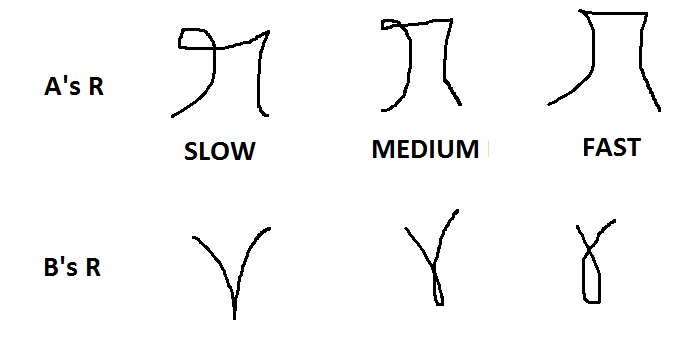
As always my solution is simple. Use pen to write in class room learning kit's screen. And how is that a solution. How will it recognize somebody's handwriting. Simple profile it. Ask the holder of the kit write certain notes( English and Mathematics) in three different speeds. Profile it 
Ask the holder to put box around every letter in a word of even a joining letter word and match it with text given by Class room Learning Kit's Learning notes. Since this exam writing kit is personal, there is no need to find artificial intelligence or any kind of stuff to learn handwriting. Simply profile it. Save this profile online, in pen drive or with the kit itself. There's much to it than simply profiling. Whenever you complete a word or a mathematical symbol, the kit automatically converts into Windows word text. You verify it and go on to write further. It will become easily when you practice. You can erase a formula or a text, simply by holding a specifically designed button in your pen and striking the text with it. You can write a formula for scribbling in clipboard. You can cut any part of a problem's solution and keep it for later use or in case you wanna swap it. Or suppose u just memorized a formula and when you got hold of the kit, just write it in clipboard. 

Wednesday, April 26, 2017

Importance of practical applications while learning a subject

It is very important for a school kid to know how to apply practically, his hard earned knowledge in every subject, he learns. If we start this habit from early classes of learning, it triggers his creative abilities and teaches him how to solve a critical problem in real world. Every subject needs practical classes with more weightage than theoretical learning. I will give one example from a difficult subject. Mathematics. Is Mathematics all about theories and calculations without applying to real world. No. I will explain one exercise which we can do in Mathematics Lab. Pythogarus theorem.

Exercise 1. Find the time it will take a plane, starting from a railway station(A) to reach the top of a hill which is located at the end of a next station(B). The length of the train, speed of the train, speed of the plane and height of hill is given. With only stop watch to calculate the result.

In practical class, we are going to actually build a small replica of all these given in the problem. Solve the problem. There may be many ways to solve this problem. All of which will be given good marks.
 
Solution 1. Run the train, which will run on the speed exactly given in the problem. Calculate the time it takes to reach the other station using a stop watch. Then calculate the distance between station A and station B. Distance = Speed / Time. We are not bothered about exact fraction points. Approximation is enough. On the whole it looks like a simple problem. But it is not so. While calculating the distance , we get distance between the front end of the train to station B. We have to add the length of the train with the result of the above calculation to get the actual distance AB. We expect students to discover these small calculations, without already being taught exactly what to do. If you give them one particular way to solve a problem and ask theoretically to do the same is not going to trigger their abilities to solve a real world problem. If a student fails to calculate this small calculation, their lab exam will get little less marks. But it is acceptable. We are not chasing numbers. We are trying to solve a problem in different ways. Critical thinking is important here. Because, if we nurture their abilities from school, we will produce a great student who knows what he studied. Not just memorized and failed. After calculating the distance we can calculate the distance AC through pythogarus theorem. From that we can find the time it takes a plane to reach height of the hill through its distance and speed.

Solution 2. This way will not give you exact answer. But it is a different approach. Even this wrong answer will get marks. Because he has tried differently. Since we know the length of the train. Sometimes, this works and gives exact answer without much calculations. Mark the front end of the train. Then run the train. When the back end of the train reaches the mark, mark the front end of the running train. If the length between two stations AC is exact multiples of train length, this will give you exact answer. Then Apply pythogarus theorem and find remaining problem. In the question, we will not say solve the problem through pythogarus theorem. Solve it through any way you want. Any theorem you can use. Any methods, any shortcuts. Anything you wish. We are not even bothered about exact solution in fractions. We are bothered about your approach and understanding of the problem, finding a way to solve the problem.

Actually in real world and in the replica, the top of the hill will not be exactly steep as in the diagram, it will be slanting. If you find a way to solve that problem as well, you score 100%. Students should be taught about all derivations regarding pythogarus theorem. Some examples which will explain the applications of pythogarus theorem. These should come in theory exams , which should have only 25% weightage. Unless students understand fully about pythogarus theorem and its applications, students won’t pass 75% of practical marks.


Simply put, You will be taught about multiplication tables from 1 to 10 and explained how you get those results. In theory exam, you will be asked what is 5*4. You can answer this question, even if you simply memorized the multiplication table. But in practical exam, you will be asked what is 12*4. You will no way answer this question unless you have completely understand how 5*4 is calculated in the first hand. What you call out of syllabus is what we call practical exam.